No Permission Needed: Gen Z Is Building the Art World From Scratch
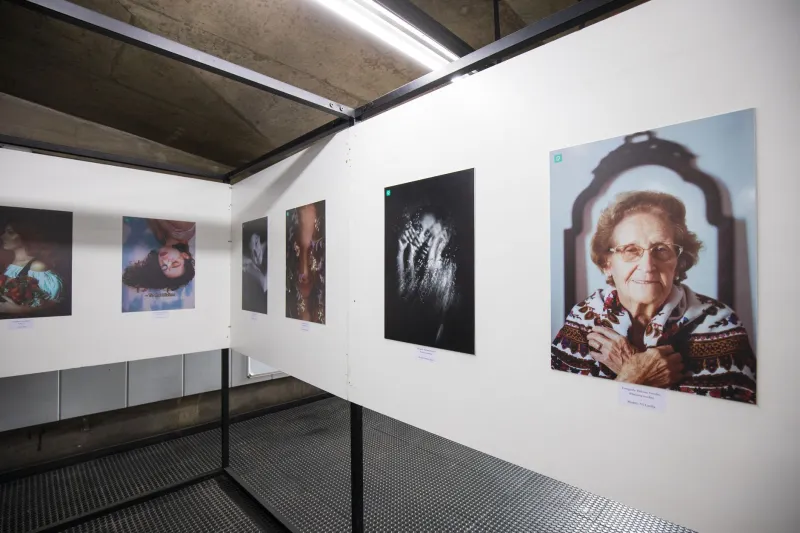
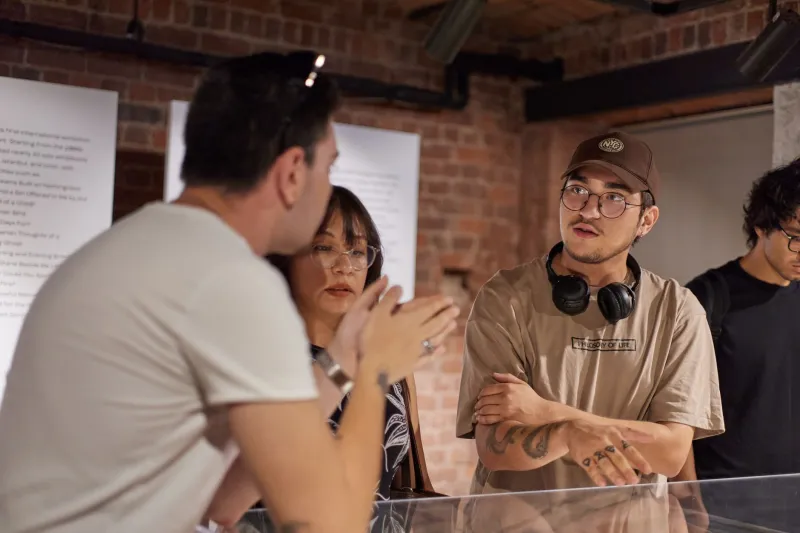
The invitation said to show up at a Pilsen apartment on a Saturday at 7 PM. There was no gallery name on the flyer — just an address, an Instagram handle, and the phrase "bring something to drink." About sixty people showed up. The living room walls were hung with paintings. The hallway had a zine table. Someone was selling hand-screenprinted tote bags out of a laundry basket in the kitchen. In the backyard, two artists were doing a live painting session while a third one filmed it for a future exhibition video.
This is what the new art world looks like. And it's not a phase.
Across the United States, a generation of artists in their early-to-mid twenties is doing something that previous generations dreamed about but rarely pulled off at scale: building genuinely independent cultural infrastructure from the ground up. Not waiting for grants. Not chasing gallery representation. Not hoping that the right critic notices them at an MFA group show. Just making the thing and putting it in front of people, however they can.
The Gatekeeping Was Always the Problem
To understand why this is happening now, you have to understand what the traditional art world pipeline actually looked like — and how comprehensively it failed most people who tried to enter it.
The model went something like this: get an expensive MFA, build relationships with the right professors, show in the right emerging artist shows, get picked up by a commercial gallery, eventually maybe make a living. At every step, the gatekeepers were overwhelmingly white, overwhelmingly wealthy, and overwhelmingly located in New York or Los Angeles. The system was designed to reproduce itself, and it was very good at that.
Gen Z artists — many of whom came of age watching that system produce increasingly homogenous work for increasingly wealthy collectors while their peers struggled to afford studio space — looked at that pipeline and largely decided to opt out.
"I applied to probably twelve galleries in my first two years out of school," says Jasmine Okafor, a painter and co-founder of the Atlanta-based collective Black Margin Press. "I got one response. And it was a rejection that somehow managed to feel condescending. So I just stopped asking."
Instead, Okafor and two friends started Black Margin Press, a publishing collective that produces limited-edition art books, prints, and zines by Black artists working in the Southeast. They've published 23 titles in three years, distributed through a network of independent bookstores, record shops, and community spaces across the country. No gallery has ever shown their work. They've never applied for a major arts grant. They're doing fine.
What These New Institutions Actually Look Like
The spaces and structures that Gen Z artists are building resist easy categorization, which is sort of the point. They're part gallery, part community center, part publishing house, part archive. They exist in apartments, in church basements, in the back rooms of coffee shops, in pop-up spaces that change location every few months specifically to stay nimble and avoid the overhead costs that kill so many small arts organizations.
In Detroit, a collective called Unbuilt Room operates out of a shared live-work space in the Corktown neighborhood. They host exhibitions, yes, but also skill-shares, printmaking workshops, and what they describe as "critical conversation nights" — essentially facilitated discussions about art, politics, and culture that are open to anyone who shows up. Their mailing list has over 4,000 subscribers. They've never had a formal grant.
In Philadelphia, a group of young photographers started a co-op darkroom and exhibition space called Silver Flat that charges sliding-scale membership fees and has become one of the most vibrant photography communities in the city. Their annual open submission show received over 800 entries last year from artists in 34 states.
In Los Angeles, a Gen Z-run curatorial collective called Soft Infrastructure has organized over 40 exhibitions in the last two years, almost entirely in non-traditional spaces — hotel lobbies, parking structures, a laundromat in Echo Park that became a temporary gallery for a weekend. Their Instagram following dwarfs that of several established LA galleries.
The Question of Legitimacy
The old art world gatekeepers will tell you — sometimes explicitly, often implicitly — that none of this really counts. That work shown in an apartment doesn't have the same cultural weight as work shown in a white cube. That a zine published by a collective isn't the same as a monograph from a major press. That legitimacy flows from institutions, and these aren't institutions.
Gen Z artists are, by and large, not particularly interested in this argument.
"Legitimacy from who?" asks Marcus Webb, a sculptor and co-organizer of a Chicago-based artist-run space called Slow Burn. "From the same institutions that spent a century actively excluding most of us? I'll pass. I'd rather build something that actually reflects the community I'm part of."
What's more interesting than the legitimacy debate is the question of longevity. Artist-run spaces have always existed, but they've historically been vulnerable to the same forces — rising rents, burnout, the pull of more stable careers — that killed many of their predecessors. What's different now might be scale and connectivity. These collectives aren't operating in isolation. They're networked with each other across cities, sharing resources, co-publishing, collaborating on events, building something that starts to look less like a collection of scrappy small operations and more like a distributed alternative infrastructure.
A Different Kind of Art World
What these young artists are building isn't just a workaround for a broken system. It's a different vision of what art institutions can be — more porous, more responsive, more honest about who they're for and why.
The work being shown in these spaces is often rawer, stranger, and more politically direct than what you'll find in established galleries. The economics are more transparent — prices are lower, revenue splits favor artists, and many events are free or pay-what-you-can. The communities that form around them are genuinely diverse in ways that most mainstream art institutions still struggle to achieve despite years of stated commitment to equity.
Is it sustainable? Is it scalable? Those are fair questions. But they might also be the wrong ones. Maybe the goal isn't to build the next MoMA. Maybe the goal is to make a world where sixty people show up to an apartment in Pilsen on a Saturday night and leave feeling like art belongs to them.
That sounds pretty good, actually. No permission required.