We're Paying to Talk to Each Other Again — And It Says Everything About Where We Are
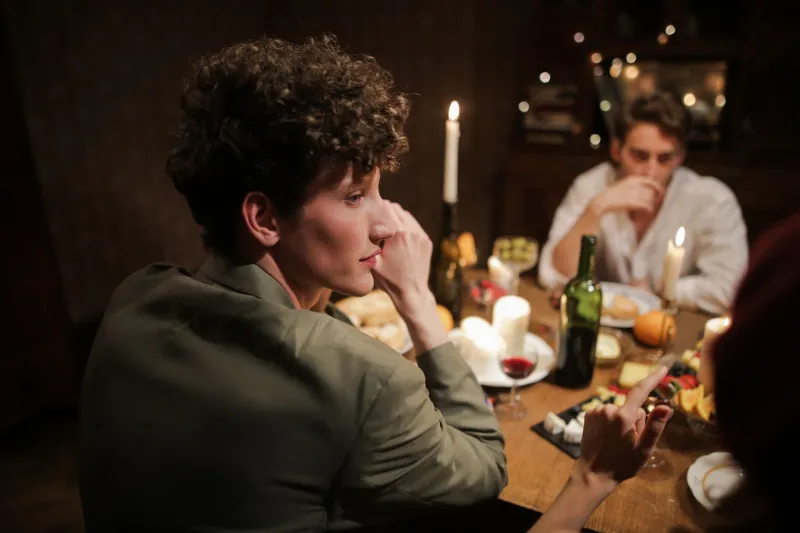
Somewhere in a converted loft in Portland, twelve strangers are sitting around a long table eating food prepared by a local chef, listening to a writer read from her unfinished novel, and then — this is the part that sounds almost quaint — talking about it. With each other. Out loud. For two hours.
They paid $65 for the privilege.
In a neighborhood library meeting room in Philadelphia, a facilitator is running a book club that costs $40 a month and has a six-week waitlist. In Nashville, a storytelling salon that happens every other Thursday in the back room of a wine bar sells out within hours of tickets going on sale. In Los Angeles, artist studio visits — where a small group pays to spend an evening in a working artist's space, hearing about process and asking questions — have become a quietly thriving micro-industry.
All of this would have seemed eccentric ten years ago. Now it feels like a response to something urgent.
What Happened to Free Connection
The story of how we got here is familiar enough that it barely needs repeating, but it's worth sitting with for a second. Over the past decade and a half, the infrastructure of casual human connection has quietly collapsed. Third places — the bars, diners, community centers, and front stoops where Americans used to encounter each other without a specific agenda — have been hollowed out by rising rents, the retreat into screens, and the general privatization of public life.
What replaced them? Platforms. Feeds. Group chats that feel intimate but somehow leave you lonelier than before. The average American reports having fewer close friends now than at any point in recent recorded history. The U.S. Surgeon General has formally named loneliness a public health crisis. These aren't abstract statistics — most of us feel them.
So what do you do when the free version of something disappears? You start paying for it. That's not cynical. That's just how scarcity works.
The Experience Economy Gets Personal
Businesses and cultural entrepreneurs have noticed the gap. The broader "experience economy" — the idea that people will pay for memorable experiences rather than things — has been a buzzword in marketing for years. But what's happening now feels different and more specific. It's not about novelty or Instagram backdrops. It's about depth.
The experiences drawing real money and real waitlists share a few characteristics: they're small (often capped at 15 or 20 people), they're structured around genuine exchange rather than passive consumption, and they involve some element of creative or intellectual engagement. A dinner where a novelist reads from their work and then takes questions isn't just dinner and it isn't just a reading — it's a container for the kind of conversation that doesn't happen on Twitter.
The people running these events are often artists, writers, and cultural workers who figured out, partly out of necessity, that there was a market for intimacy. A poet in Brooklyn who started hosting monthly "literary dinners" in her apartment didn't set out to build a business — she set out to have the kinds of conversations she wasn't having anywhere else. The fact that people would pay for a seat at her table came as a surprise. It probably shouldn't have.
Book Clubs as Cultural Infrastructure
The book club revival deserves its own examination, because it's happening at a scale and with a seriousness that goes beyond the Oprah-era version. Facilitated book clubs — where a trained moderator guides the discussion rather than letting it drift into wine-fueled tangents — have become a genuine service industry.
Some of these are run by independent booksellers trying to create revenue streams that don't depend entirely on selling books. Others are standalone operations run by educators, therapists, and facilitators who understand that the book is really just a pretext. What people are paying for is the structure: a reason to be in a room with other humans, a shared text to organize the conversation, and someone skilled enough to make sure everyone gets heard.
The therapeutic overtones aren't incidental. Several of the most successful facilitated book clubs explicitly position themselves at the intersection of literary culture and mental wellness — not therapy, but adjacent to it. The line between "I want to talk about this novel" and "I want to be witnessed by other people" turns out to be pretty thin.
Dinner Theater's Unlikely Comeback
Meanwhile, dinner theater — long the punchline of a certain kind of cultural snobbery — is having a serious moment. Not the dinner theater of the 1980s, with its fixed menus and murder mystery scripts. Something more hybrid and more interesting.
Immersive dining experiences that incorporate original performance, live music, or storytelling have been multiplying in mid-size American cities. The format varies widely: some are highly produced theatrical events, others are more informal collaborations between a chef and a musician. What they share is the refusal to let entertainment be purely passive. You're not just watching. You're in the room. The performer is ten feet away. You can hear them breathe.
That proximity is, it turns out, exactly what people are paying for. Screens are frictionless and infinite and ultimately unsatisfying in a particular way that's hard to articulate but easy to feel. A live human being doing something real and vulnerable in front of you — that hits differently. It always did. We just forgot for a while.
What We're Actually Hungry For
It would be easy to read all of this as a symptom of something broken — and it is, partly. The fact that genuine human connection has become a premium product with a ticket price is genuinely troubling. Not everyone can afford $65 for a literary dinner. The loneliness economy, like most economies, isn't equally accessible.
But there's something else here too. The people showing up for these experiences aren't passive consumers. They're actively choosing depth over convenience, slowness over scroll, presence over content. In a cultural moment defined by infinite cheap stimulation, that choice feels almost countercultural.
We're paying to talk to each other again. That's a little sad. It's also, maybe, a start.