Sourdough, Stamps, and Seed Packets: How Gen Z Made Your Dad's Hobbies Into a Whole Aesthetic
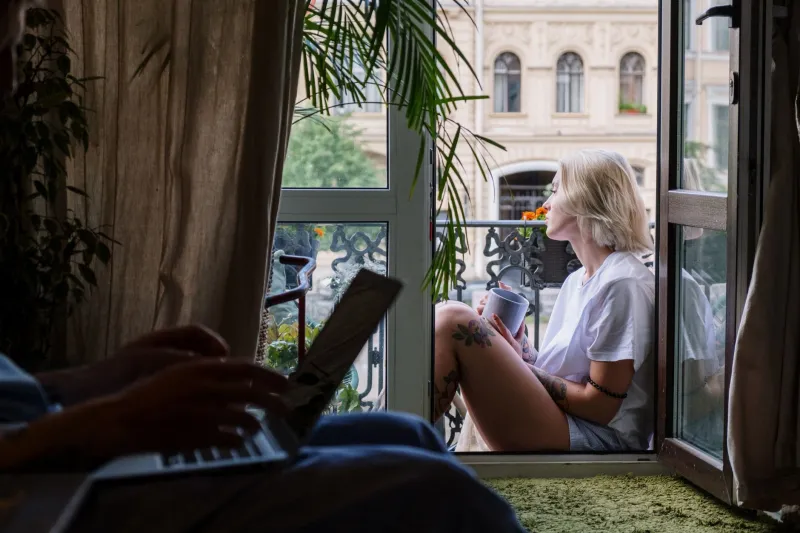
In a small apartment in Columbus, Ohio, 24-year-old Destiny Okafor has a wall of shelves lined with Ball jars. Some hold dried herbs she grew on her windowsill. Others contain homemade jam, pickled vegetables, and a starter culture she's been feeding for two years. On her desk, there's a box of stationery and a fountain pen. Her phone, she says, stays in another room most evenings.
"People think it's quirky," she says, laughing. "But honestly? It just feels like the only sane response to everything."
Destiny isn't unusual. She's part of a growing wave of young Americans who have turned — loudly, intentionally, and with considerable aesthetic commitment — toward the pastimes their parents and grandparents practiced without irony. Gardening. Baking from scratch. Board games. Embroidery. Letter writing. Canning. The hobbies that got mocked in the '90s as the uncool province of suburban dads and church ladies have become, somehow, the defining cultural gestures of a generation.
The Rebellion That Looks Like a Hobby
To understand why, you have to understand what these young people are rebelling against — and it's not their parents. It's the speed, the optimization, and the relentless productivity logic of digital life.
Growing up chronically online, many Gen Z adults spent their formative years in an environment that commodified their attention, gamified their social lives, and told them their worth was measurable in metrics. Every interest became a potential brand. Every skill became a potential side hustle. Rest itself got repackaged as "self-care" and sold back to them at a premium.
Against that backdrop, growing tomatoes from seed — slowly, messily, with no guarantee of a good harvest — is genuinely countercultural. It cannot be optimized. It does not scale. The algorithm cannot rank it. The tomato does not care about your engagement rate.
"There's something deeply satisfying about doing something where the output is just... the thing," says Jordan Tran, 26, a graphic designer in Portland who spends weekends doing woodworking and maintaining a small vegetable plot. "I make a cutting board, and it's a cutting board. Nobody's going to monetize that. It belongs to me in a way that my digital work never really does."
Nostalgia as Luxury, Slowness as Status
There's a class dimension here worth sitting with honestly. The ability to spend a Saturday afternoon making bread from scratch, or to dedicate evenings to hand-lettering correspondence, is not equally available to everyone. Time is unevenly distributed, and the romanticization of slowness can tip quickly into a lifestyle aesthetic accessible only to people with financial cushion.
But that critique, while real, doesn't fully explain the phenomenon — because it's showing up across economic lines, in shared community gardens in lower-income neighborhoods, in free seed libraries, in mutual aid networks built around food preservation and skill-sharing. The impulse isn't just aesthetic. It's also practical and communal.
What does feel true is that authenticity has become a kind of currency. In a cultural moment saturated with content that is professionally produced, algorithmically distributed, and carefully branded, the handmade carries a weight it hasn't had in decades. A loaf of bread you baked yourself, a sweater you knitted, a letter written in your actual handwriting — these things communicate something that a carefully curated Instagram grid simply cannot.
"I write letters to maybe eight people," says Amara Diallo, 23, a nursing student in Baltimore who got into correspondence during the pandemic and never stopped. "And those eight relationships are the most real ones in my life. There's something about the slowness of it — you have to think about what you actually want to say."
The Parents Who Didn't Know They Were Ahead of the Curve
There's a quietly touching subplot in all of this: the parents and grandparents who are being rediscovered as unexpected mentors.
Trends like "cottagecore" and the broader slow-living aesthetic have sent young people back to their families with genuine curiosity — asking grandmothers to teach them to can, calling fathers for gardening advice, dusting off recipe boxes that sat ignored for years. For a generation that grew up watching its elders' cultural touchstones get dismissed as dated, there's something quietly vindicating about it.
"My mom used to apologize for not being a 'cool' mom," says Destiny. "She didn't wear the right things or listen to the right music. But she knew how to make everything from scratch and she had a garden that fed our whole block in the summer. I look at that now and I think — she was the coolest person I knew."
What This Actually Says About Modernity
The broader cultural read here is less about hobbies and more about exhaustion. Collective, structural, generational exhaustion with a mode of living that has prioritized speed, efficiency, and digital mediation above almost everything else.
The embrace of analog isn't nostalgia in the simple sense — a longing to return to some idealized past. It's more like a negotiation with the present: keeping the things that are genuinely good about modern life while reclaiming some of what got discarded in the rush toward digital everything.
Board games at a bar. A community canning workshop. A neighborhood seed swap. These aren't rejections of the future. They're proposals for a different one — slower, more tactile, more rooted in the physical reality of bodies in rooms, hands doing things, time passing at the speed of a rising loaf.
The sourdough isn't just bread. It's an argument. And right now, a lot of young Americans are making it.