The Museum Isn't a Temple Anymore — And That's a Very Good Thing
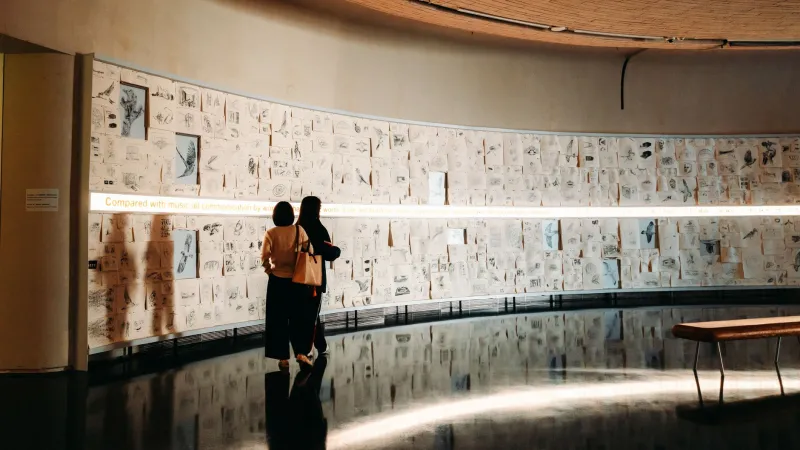
For most of their history, American museums have operated on a specific kind of logic: the art lives here, behind these walls, and you come to it. You dress appropriately. You speak quietly. You don't touch anything. You pay at the door. And if none of that works for you — if the admission price is out of reach, if the neighborhood feels unwelcoming, if the experience has never felt like it was designed with you in mind — well, the art will be here when you change your mind.
That logic is crumbling. Slowly, unevenly, sometimes reluctantly — but crumbling nonetheless. And what's emerging in its place is something more interesting, more honest, and more genuinely useful to the communities these institutions claim to serve.
The Price Problem
Let's start with the obvious. Museum admission in major American cities has gotten expensive in a way that's hard to justify against any equity framework. The Art Institute of Chicago charges $25 for adults. The Met in New York technically operates on a suggested donation model for New York State residents, but the experience of walking up to that ticket counter and offering less than the printed price is — for most people — quietly intimidating enough that it rarely happens.
The result is that museums, whatever their stated missions, have become de facto luxury experiences. The demographics of who walks through the doors on any given Saturday reflect that reality.
Some institutions are trying to change the math. The Denver Art Museum has experimented with free community days that draw visitor numbers dramatically higher than typical weekends. The Smithsonian's free admission model remains one of the most democratic cultural policies in the country, and advocates have long argued it should be the standard rather than the exception. Pay-what-you-wish evenings at smaller institutions have generated both foot traffic and genuine community goodwill — and the revenue, it turns out, often holds up better than expected when people feel invited rather than tolerated.
Curation That Looks Like the Community
Beyond the ticket booth, the more radical experiments are happening inside the galleries themselves. A growing number of museums are inviting community members — not just donors or advisory board members, but actual residents of the neighborhoods surrounding these buildings — into the curatorial process.
The results are sometimes uncomfortable for institutions accustomed to total creative control. When a community curation project at a regional history museum in the Midwest invited local Black residents to help interpret a collection that had previously told their neighborhood's story entirely through a white civic lens, the revised exhibition looked radically different. Objects that had been labeled as curiosities were recontextualized as evidence of survival and resistance. Stories that had been omitted came back in.
That kind of discomfort is, increasingly, the point. Museums built on collections that were assembled through colonial extraction, institutional racism, or simple cultural blind spots can't fix those problems with a land acknowledgment plaque. They have to actually share power over how the collection is read.
Art That Leaves the Building
Perhaps the most literal version of the new access model is the growing practice of taking the collection out of the building entirely. Mobile museum programs, neighborhood pop-ups, and artifact lending initiatives are all attempts to answer a question that should have been asked a long time ago: what if the museum came to you?
The Brooklyn Museum has sent curators into public housing developments for artist-in-residence programs. The Museum of Fine Arts in Boston has partnered with schools in lower-income districts to bring original works — not reproductions, actual works — into classrooms. Several natural history museums have created lending libraries of tactile replicas that go to community centers, libraries, and senior facilities.
These aren't PR stunts, or at least the best versions of them aren't. They're an acknowledgment that the physical museum building — however beautiful, however historically significant — is also a barrier. The art doesn't need the building to do its work.
What "Belonging" Actually Means
There's a phrase that keeps appearing in the mission statements and strategic plans of forward-thinking museums: "a place where everyone belongs." It's a nice sentence. It's also, in most cases, aspirational fiction.
Belonging isn't created by a slogan. It's created by evidence — by seeing your community's history on the walls, by being able to afford to walk through the door, by having your grandmother's language in the exhibition labels, by not being followed by security guards while you look at paintings.
The museums that are actually making progress on this aren't the ones with the most ambitious statements. They're the ones making unglamorous operational decisions: hiring curators from the communities they serve, renegotiating admission structures even when it hurts the budget, sitting in uncomfortable community meetings and listening to criticism without becoming defensive.
It's slower work than a rebrand. It's also the only work that actually changes anything.
The Living Museum
What all of this points toward is a different conception of what a museum is for. Not a repository. Not a temple. Not a monument to the taste of the people who funded it a century ago.
A living cultural hub — one that takes its cues from the neighborhood it occupies, that changes as the community changes, that understands its collection as a resource belonging to the public rather than a treasure belonging to the institution. Some museums are already there, or getting close. Most are still figuring out how to let go.
The letting go is the hard part. But it's also, increasingly, the only way forward.