Church Basements and Radical Truth: The Community Theater Scene That's Leaving Hollywood Behind
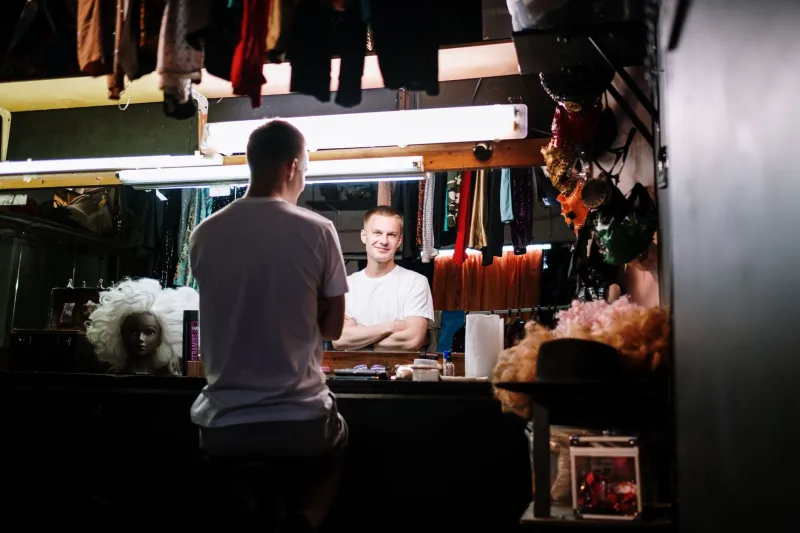
The stage is a repurposed loading dock. The lighting rig is borrowed from a friend's band. The audience — forty-three people on mismatched chairs — has driven from three different zip codes to be here on a Tuesday night. And what they're watching is a play about a Black transgender woman navigating a welfare system designed to grind her down. It's specific, it's devastating, it's funny in all the wrong ways, and it's more alive than anything currently streaming on any platform you pay for.
This is community theater in 2025. And it is absolutely nothing like what that phrase used to mean.
The Old Reputation and the New Reality
For decades, "community theater" conjured a specific image: enthusiastic amateurs in a high school auditorium performing Grease for an audience of proud parents. Charming, harmless, deeply unthreatening. A hobby, not a cultural force.
That image is not just outdated — it's been replaced by something almost unrecognizable. Across the country, in cities that never make the cultural conversation, local theater companies are producing work that is experimental, identity-forward, politically charged, and formally adventurous in ways that would make most Broadway producers nervous.
"We're not doing what Broadway does," says Darnell Washington, co-founder of a Black-led theater collective in Memphis that operates out of a converted auto shop. "We're doing what Broadway won't do. And our audiences know the difference."
Stories Nobody Else Will Tell
The content gap between mainstream entertainment and community theater right now is staggering — and that gap is where some of the most important work is happening.
Netflix needs a show to perform for millions of viewers across dozens of demographics simultaneously. A streaming algorithm rewards broad appeal and familiar narrative structures. A 50-seat theater in Albuquerque doesn't have those constraints. It can go deep, go specific, go strange.
The result is a landscape of local productions tackling subjects that mainstream entertainment handles clumsily at best: disability and medical ableism told from the inside; undocumented immigrant experiences that refuse the redemption arc Hollywood demands; queer stories that aren't coming-out narratives; working-class lives that don't get resolved by individual grit.
"I've seen more honest depictions of what it's like to be a fat woman in America in local theater than in everything I've watched on TV combined," says Tamara, a 34-year-old audience member at a community theater showcase in Kansas City. "These aren't inspirational stories. They're just true ones."
The Laboratories Nobody's Watching (Yet)
What makes local theater particularly exciting right now is its function as a genuine laboratory for form — not just content.
Without the financial pressure of recouping a $15 million production budget, community theater directors are free to experiment with structure, staging, and audience relationship in ways that established institutions rarely risk. Plays that break the fourth wall in sustained, uncomfortable ways. Performances that ask audiences to move through a space rather than sit in front of it. Work that deliberately refuses resolution or catharsis.
In Portland, Oregon, one collective has been developing a series of "witness plays" — productions where the audience is positioned as active participants in a moral situation rather than passive observers. In Atlanta, a disability-led theater company performs exclusively in spaces that are architecturally accessible in unconventional ways, making the venue itself part of the artistic statement.
"Form is content," says Maria Reyes, a playwright and director working out of San Antonio whose latest piece uses overlapping, simultaneous monologues to depict the fragmented experience of caregiving. "If you're telling a story about people who've been ignored, you can't tell it in a neat three-act structure. The form has to carry the truth too."
The Audience That Showed Up
None of this would matter if no one was watching. But something has shifted in who shows up to local theater — and why.
Partly it's a streaming-era reaction. When everything is available everywhere all the time, the live event — the thing that happens once, in a room, with other human bodies — becomes genuinely precious. Audiences are seeking out experiences that can't be rewound or paused or consumed in the background while doing something else.
But it's also something more specific. People who feel unseen by mainstream media are finding themselves in these productions in ways they simply don't elsewhere. The audience isn't just watching — they're being witnessed.
"I cried at a show last spring in a way I haven't cried at anything in years," says Jerome, a 27-year-old nurse in Detroit who drives forty minutes to attend local theater productions. "Not because it was sad in the way movies are sad. Because it was true in a way movies never are. I recognized something real."
The Economics of the Radical
It would be dishonest to romanticize this without acknowledging what makes it possible — and what makes it precarious.
Community theater operates on economic margins that would be unthinkable in any other cultural industry. Directors who work day jobs. Actors who build sets on weekends. Grant cycles that determine whether a season happens at all. The freedom from commercial pressure is real, but so is the financial fragility.
What sustains it, more often than not, is community in the most literal sense. Fundraisers that double as neighborhood gatherings. Sliding-scale ticket prices that make attendance genuinely accessible. Relationships between artists and audiences that are ongoing, personal, and reciprocal in ways that streaming can't replicate.
"Our audience isn't subscribers," says Washington. "They're neighbors. They know us. We know them. That changes what we make and why we make it."
Why This Matters Beyond Theater
The rise of bold community theater is a symptom of something larger: a growing hunger for culture that is made by specific communities for specific communities, rather than manufactured for the broadest possible audience and distributed everywhere.
It's part of the same impulse driving the zine revival, the vinyl resurgence, the local music scene explosions happening in cities nobody's paying attention to. A rejection of scale as the measure of value. An insistence that intimate, local, and specific can be more meaningful than massive, global, and optimized.
The church basement stage, the folding chairs, the borrowed lighting rig — these aren't limitations. They're the point.