One Hundred Watts of Defiance: The Tiny Radio Stations America Forgot to Kill
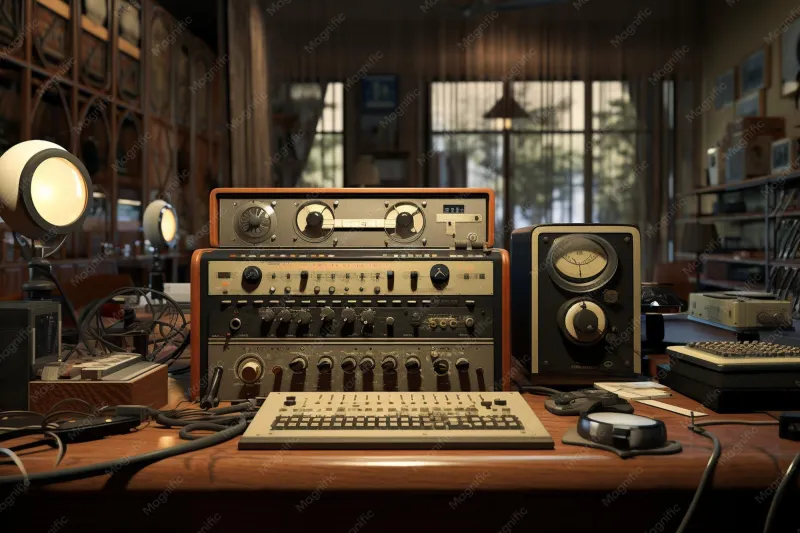
Photo: small community radio station vintage microphone broadcast equipment basement, via img.freepik.com
The transmitter sits on a shelf in the corner of the First Methodist church basement, humming quietly next to a stack of hymnals and a coffee maker older than most of the volunteers. From this shelf, one hundred watts of power radiate outward in a roughly ten-mile circle. Inside that circle, everything from the county school board meeting to a three-hour polka program called 'Accordion Time' reaches every kitchen radio and truck dashboard in range.
This is low-power FM — LPFM for short — and while the media industry talks endlessly about streaming wars and podcast empires, these tiny stations have been quietly becoming the most trusted media institutions in thousands of American communities.
What a Hundred Watts Sounds Like
LPFM stations operate at a fraction of the power of commercial radio. Their signals don't leap over mountains or ride the interstate for a hundred miles. They cover a town, maybe two. And that limitation, volunteers will tell you, is the entire magic.
'When you broadcast to ten miles, you can't be generic,' explains Ruth, a retired schoolteacher who hosts the Saturday morning show on her station in rural Minnesota. 'Everyone listening knows the same lake, the same diner, the same weather. I play what they want, and I know their grandkids' names.'
The programming reads like a time capsule that never got buried: local high school football with play-by-play from a booster dad who's been calling games since 1994. A half-hour reading of the library's new arrivals. Polka on Sundays, bluegrass on Tuesdays, and in one Texas town, a weekly show where the county extension agent answers callers' gardening questions live.
The Consolidation Nobody Voted For
The reason these stations matter so much now is what happened to everything else. Over the past three decades, corporate consolidation hollowed out local radio. In town after town, the stations with real towers and real budgets were bought, merged, and converted into satellite-fed formats beaming the same syndicated voices into hundreds of markets at once. The local DJ became a voice actor in another time zone. The weather report covered three states.
LPFM was created partly as an antidote — a licensing class designed for churches, schools, nonprofits, and community groups. For years it was seen as a cute backwater of the dial. Then the consolidation wave crested, and suddenly the little station in the church basement was the only place broadcasting the name of the family whose barn burned down, or the rescheduled date of the blood drive, or the fact that the bridge on Route 9 was closed.
'When the flood came through in 2019, we were on the air continuously for sixty hours,' says one station manager in the Midwest. 'The big signal out of the city was playing automated programming. We were telling people which roads were out. After that, we didn't have to explain why we exist.'
The New Volunteers
Here's the part that surprises people: LPFM isn't dying, it's renewing. A wave of younger volunteers — some fleeing algorithmic culture, some just looking for a tangible hobby — is showing up at these stations asking for training on the board.
They're launching shows their grandparents would recognize and some they wouldn't: a Gen Z-hosted local music program featuring bands from the tri-county area, a show that reads the police blotter in a deadpan true-crime style, a teen-run evening slot out of a high school station where students learn everything from audio engineering to libel law.
The station in the church basement now runs a monthly 'open board night' where anyone can come learn the equipment. Attendance, Ruth reports, is 'better than the potluck, and that's saying something.'
Find Yours Before You Need It
Most people don't know their local LPFM exists until the day they need it — the snowstorm, the power outage, the night the creek rises. But you don't have to wait for an emergency. Search the FCC's LPFM database for your zip code, or just spin the dial below the college stations and listen for the moments that could only come from within ten miles of your house.
Better yet, show up. These stations run on volunteers, and the barrier to entry is genuinely low: if you can talk and press a button, you can host a show. If you can't, they'll teach you the button.
A hundred watts isn't much. But pointed at the right town, at the right time, it's exactly enough.