Your Couch Is the Hottest Ticket in Town: Inside America's Underground House Show Boom

Photo by Photo by Clay Banks on Unsplash on Unsplash
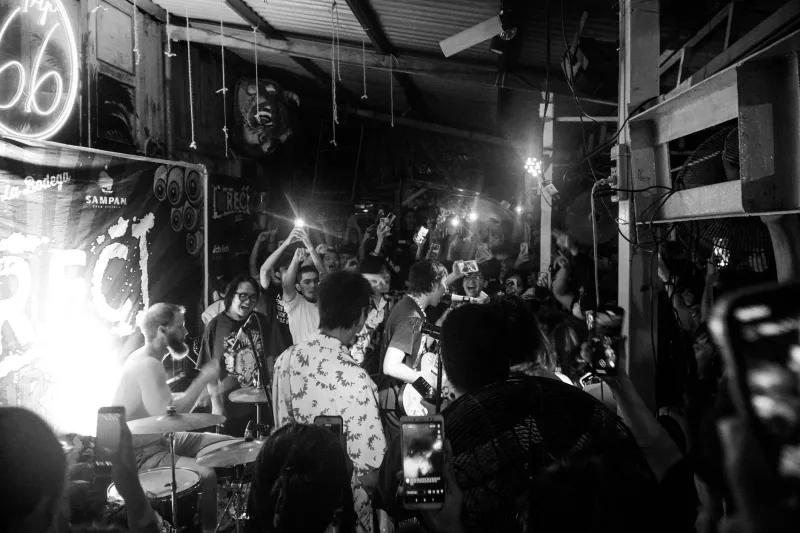
There's a moment that happens at every good house show. The artist finishes a song, and instead of the polite club applause — the kind that's really just a signal to check your phone — somebody on the couch just says, out loud, "Whoa." No buffer. No fourth wall. Just a room full of people reacting like humans.
If you haven't been to one lately, you might be surprised how many are happening within a ten-minute drive of you. Living rooms in Portland basements in Pittsburgh, garages in Tucson, screened-in porches in Asheville. The informal performance economy — call it the karaoke basement economy, call it whatever you want — is thriving completely off the books, and honestly, that's the whole point.
The Math That Broke the Club Model
Talk to any touring musician under 35 and you'll hear the same story. A club gig means a door split, a two-drink minimum, a 45-minute set for six people who came to watch the Knicks game over your shoulder. A house show means a guaranteed crowd, a hat passed around that actually gets passed around, and a floor to sleep on.
"I made more money on a stranger's rug in Columbus than I did at three legit venues on the same tour," one folk singer told us, asking to stay anonymous because, well, some of these shows exist in a zoning gray area and she'd like to keep it that way.
For hosts, the calculus is simpler. You already know people who play music. You already have speakers. Your friends are bored of going to the same three bars. String it together and you've got a venue — no liquor license, no booking agent, no cut for anybody.
What a Host Actually Does
Maya Okonkwo has been running shows out of her duplex in Kansas City for four years. She books mostly singer-songwriters and small jazz ensembles, caps attendance at 35, and asks for a $10–15 suggested donation that goes straight to the performer.
"It's just hosting a party with a better soundtrack," she laughs. "The only real rules are: respect the neighbors, respect the artist, and nobody posts the address publicly."
That last rule matters. House shows live and die by word of mouth — group chats, Instagram DMs, a text from a friend of a friend. The intimacy isn't a marketing gimmick; it's a survival mechanism. And it creates something commercial venues have spent millions trying to manufacture: scarcity plus genuine community.
The Couch-Side Advantage
Performers describe the difference in almost physical terms. At a club, you're performing at people. In a living room, you're performing with them. Someone's dog is asleep by the amp. A kid is drawing on the floor. The artist tells the actual story behind the song instead of the rehearsed version.
"The feedback loop is instant," says Okonkwo. "If a song lands, you can hear a pin drop. If it doesn't, you know immediately — and that's a gift, honestly. It makes you better faster."
There's also the matter of what happens before and after. At a bar show, the artist loads out and vanishes. At a house show, they eat the chili. They meet the couple who wants to book them in Milwaukee. Real careers, weirdly, get built this way.
Not Nostalgia — Infrastructure
It's tempting to file this under "DIY revival" nostalgia, but the people doing it aren't recreating their parents' basement punk scene. They're building something the commercial circuit stopped providing: affordable, accessible, human-scale live music. Some hosts are now formalizing — house concert networks, ticketing platforms built for private shows, even insurance products for living room venues.
The venues aren't going anywhere. But neither, it turns out, is the couch.
If there's one near you, go. Bring cash. Compliment the chili.