Ghost Storefronts, Living Art: The Vacant Retail Takeover Nobody Planned but Everyone Needed
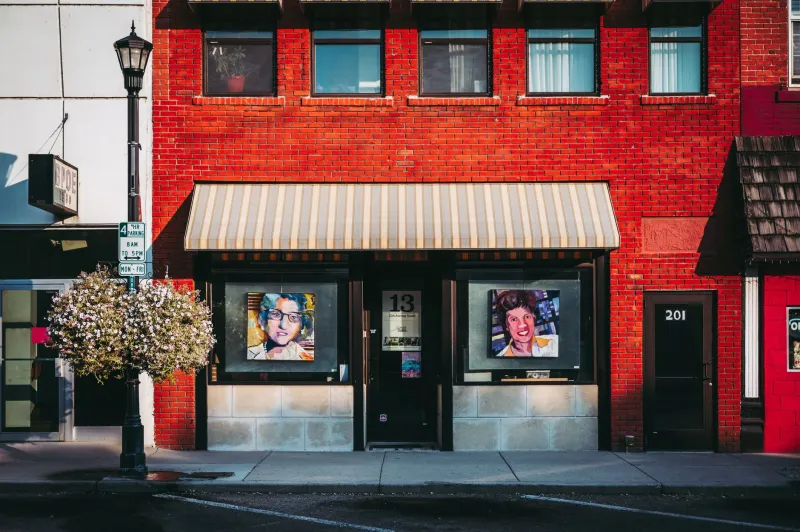
The sign for the old RadioShack is still faintly visible beneath the whitewash on the window of 412 West Broad Street in a mid-sized Ohio city we'll call typical. Inside, on a Thursday evening in March, about sixty people are standing on bare concrete floors watching a dancer perform a 40-minute piece about her mother's immigration from Lagos. There are folding chairs along one wall. The lighting rig is held up with gaffer tape. The performance is extraordinary.
This is not a formal venue. It has no liquor license, no official capacity signage, and technically no lease — the collective that runs it operates under a short-term occupancy agreement with a property management company that would rather have a warm body in the space than a vacant storefront drawing code violations. The arrangement is informal, precarious, and increasingly common.
Across the United States, as retail vacancies have climbed to historic highs — accelerated by the slow bleed of e-commerce and the acute shock of the pandemic — an unlikely secondary economy has emerged in the gaps. Artists, collectives, and cultural organizers are moving into dead commercial space and making it briefly, urgently alive.
The Geography of the Possible
This isn't happening uniformly. It's concentrated in specific kinds of places: mid-sized cities with struggling downtowns, neighborhoods in larger metros that got left behind by the last wave of development, small towns where the anchor store closed and took the foot traffic with it.
In Detroit, artist collectives have been doing this for years in buildings that major developers passed over. In Tulsa, the city itself has formalized the arrangement, running a program that places artists in vacant storefronts as a deliberate downtown revitalization strategy. In Providence, Pittsburgh, Richmond, and Albuquerque, variations of the same thing are happening — some organic, some city-supported, some operating in a gray zone that nobody is eager to examine too closely.
"The vacancy is the opportunity," says Keisha Monroe, who runs a visual art collective in a former furniture store in Durham, North Carolina. "These spaces are big, they're cheap, and the landlords are desperate. For the first time in a long time, artists have leverage."
Her collective has hosted over 80 events in 18 months — gallery openings, film screenings, community workshops, a youth photography program, a weekly open studio. The space has no permanent walls. Everything is temporary, moveable, adaptable.
What Temporary Does That Permanent Can't
There's something about the impermanence that matters culturally, not just economically. Traditional arts institutions — museums, established galleries, performing arts centers — carry the weight of their permanence. They have boards, donors, programming committees, and histories that shape what gets shown and who gets to show it.
The pop-up space has none of that. It can take risks that a funded institution with a reputation to protect cannot. It can show work that's unfinished, confrontational, or made by people who would never get past a traditional application process. It can fail publicly, reconfigure overnight, and try something completely different next weekend.
"We did a show that was explicitly about police violence in our neighborhood," says Monroe. "No established gallery in this city would have touched it. We put it up in 48 hours and had 200 people come through. That's not something a permanent institution can do."
The speed and the stakes are different. And for a lot of the artists involved, that's precisely the point.
The Gentrification Question Nobody Wants to Dodge
But here's the tension that honest coverage of this phenomenon can't skip past: art has a documented history of preparing neighborhoods for people who can afford to displace the artists who made those neighborhoods interesting.
The pattern is familiar enough to have become a cliché. Artists move into cheap, overlooked space. They make it interesting. Coffee shops follow. Then boutiques. Then rents rise. Then the artists leave — or get pushed out — and the neighborhood becomes a lifestyle destination for people with considerably more money than the original residents.
The pop-up model introduces a wrinkle into this narrative, but doesn't resolve it. Because temporary occupation of vacant storefronts can absolutely function as a form of place-marketing — making a street feel activated and desirable — without meaningfully benefiting the communities that were already there.
"I think about this constantly," says Rafael Espinoza, a muralist and organizer in San Antonio who has helped coordinate several vacant-space takeovers in historically Latino neighborhoods on the city's east side. "We're not trying to make this place attractive for people who weren't here. We're trying to make it good for the people who are. But I can't control what happens after we leave."
Espinoza has started building community benefit agreements into the arrangements his collective makes with property owners — requirements that a percentage of programming serve local youth, that admission be free or sliding-scale, that local artists get priority for wall space and performance slots. It's not a structural solution, but it's an attempt to embed accountability into the impermanence.
Art as Infrastructure, Not Ornament
The most compelling argument for what's happening in these spaces isn't aesthetic. It's civic.
A block with a vacant storefront is a broken block. It signals disinvestment, communicates abandonment, and creates the conditions for further decline. A block with a light on — even a temporary, impermanent, gaffer-tape-and-folding-chair light — sends a different signal. It says someone cares what happens here. It creates a reason to walk down the street.
Whether that's enough to constitute genuine community revitalization, or whether it's just a more interesting-looking form of the same old displacement, depends entirely on who controls what comes next.
The dancer in the former RadioShack takes her final bow. The applause in the empty storefront is loud and long, bouncing off bare walls that have never heard anything like it. Outside, the street is quiet. For now, the building belongs to something other than vacancy.
What it belongs to next is the real question.