Cut, Paste, Resist: How DIY Zines Became the Most Honest Media in America
The Feed Can't Hold Everything
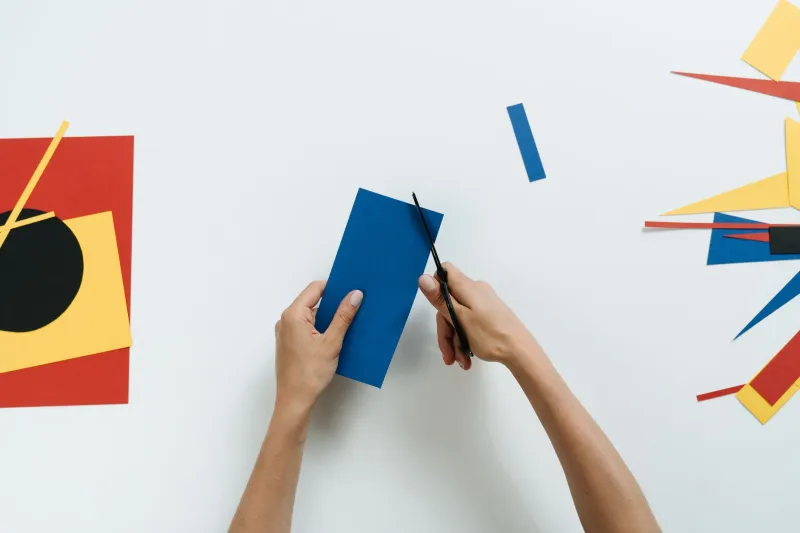
Something happens when you hold a zine for the first time. The paper might be slightly crooked. The ink might smear if you're not careful. There's a staple in the middle that someone pressed down by hand, probably on a kitchen table at midnight. And somehow, all of that imperfection makes it feel more real than anything you've scrolled past in the last hour.
That's not an accident. Across the US, a new generation of zine makers is deliberately choosing the physical, the tactile, and the unfiltered over the polished and the algorithm-approved. And the movement is growing fast — not in spite of social media's dominance, but directly because of it.
"Instagram shadowbanned three of my posts in one week," says Dara Okonkwo, a 26-year-old illustrator and zine creator based in Atlanta. "All of them were about reproductive rights. None of them were graphic. I just got tired of performing for a platform that clearly didn't want my voice there." So she started Unapologetic, a quarterly zine that now ships to over 400 subscribers across the country. She prints it at a local copy shop, assembles it herself, and mails it in hand-addressed envelopes.
"People write back," she says. "Actual letters. That never happened on Instagram."
What Exactly Is a Zine, and Why Does It Keep Coming Back?
Zines — short for fanzines or magazines — have been around in various forms since the 1930s, when science fiction fans started self-publishing newsletters to share with each other. They exploded in the punk era of the 1970s and again during the riot grrrl movement of the early '90s, when bands like Bikini Kill used them to circulate feminist manifestos and community news outside of mainstream media channels.
The format never really died. It just went quiet for a while, overshadowed by blogs, then Twitter, then Instagram. But the conditions that made zines necessary in 1993 haven't disappeared — if anything, they've gotten more complicated. Corporate content moderation, demonetization policies, and the sheer noise of algorithmic feeds have created a new set of frustrations that feel startlingly familiar to the people who were photocopying manifestos thirty years ago.
"Every generation rediscovers zines when they realize the mainstream won't carry their message," says Marcus Bell, who runs a small press and zine distro out of a storefront in Philadelphia called Paper Riot. "Right now, that's queer youth, it's immigrant communities, it's disabled artists, it's people writing about things that get flagged the second they post them online."
Bell has been distributing zines for nearly fifteen years, but he says the last three have been unlike anything he's seen before. New titles show up at his door almost every week. The range is staggering: mental health memoirs, bilingual poetry collections, climate grief journals, explicit queer erotica, anarchist theory written in comic form, recipe zines from grandmothers who don't speak English.
"This isn't nostalgia," he says firmly. "This is necessity."
The Algorithm Doesn't Care About You — The Zine Might
There's a specific kind of frustration that comes from creating something personal and vulnerable, posting it online, and watching it get buried. Maybe the platform's content filters flagged a keyword. Maybe the engagement didn't come fast enough and the algorithm deprioritized it. Maybe you got reported by someone who didn't like what you had to say. Whatever the reason, the result is the same: your voice, muffled.
Zines don't work that way. Once a zine is printed, it exists. It can't be taken down, demonetized, or buried in a feed. It can be passed from hand to hand, left on a coffee shop table, slipped under a dorm room door. It can sit on a shelf for twenty years and still say exactly what it was always meant to say.
For many creators, that permanence is the whole point.
"I make zines about being undocumented in the US," says Luz Mejia, a 23-year-old based in Los Angeles who goes by the name Luz Libre in print. "I've had accounts deleted. I've had posts removed. With a zine, nobody can erase it. It's already out there in the world."
Her most recent issue, a hand-illustrated account of her family's immigration story, sold out its first print run of 200 copies in under two weeks — mostly through word of mouth and a small table at a local arts market.
Small Press, Big Reach
The infrastructure supporting this movement has gotten surprisingly robust. Zine fests — community events where makers sell and trade directly with readers — have popped up in cities from Seattle to Nashville to Detroit. The Portland Zine Symposium, one of the oldest in the country, regularly draws thousands of attendees. New fests are launching every year in smaller cities and college towns that previously had no formal zine community at all.
Online distros and mail-order networks have also made it easier than ever to get a zine in front of readers who live far from any major creative hub. Platforms like Gumroad let creators sell digital PDFs alongside physical copies, building hybrid audiences without surrendering full creative control to a larger platform.
And then there's the community aspect — something that gets underestimated by people who think of zines as a solitary, bedroom-based activity.
"Making zines got me a whole community I didn't have before," says Okonkwo. "I know people in Denver, in Brooklyn, in rural Mississippi, who I've never met in person but who I feel genuinely connected to because we've traded zines and written letters. You can't manufacture that on social media. It takes time and intention."
What Gets Said on Paper That Can't Be Said Online
The content itself is worth paying attention to. Because zines operate entirely outside of platform moderation, they can carry conversations that social media actively suppresses. Explicit discussions of abortion access. Detailed harm reduction information for drug users. Radical political theory. Survivor stories that would be flagged as sensitive content. Erotic art made by and for queer communities.
This isn't shock value for its own sake. It's the natural result of a medium that has no gatekeeper. And for communities whose experiences are routinely deemed too graphic, too political, or too explicit by corporate content standards, that freedom is genuinely radical.
"The stuff that gets removed online is usually the stuff that most needs to be said," Marcus Bell observes. "Zines are where that conversation goes."
The Future Is Handmade
None of this means zines are about to replace Instagram or take down Meta. They don't need to. That's not the point. The point is that a growing number of Americans — young, creative, politically engaged, and deeply skeptical of the platforms they grew up on — are choosing a slower, messier, more human way of communicating.
They're choosing paper over pixels, imperfection over polish, and community over reach. They're choosing to say what they mean without asking an algorithm for permission.
And if you want to find them, you're going to have to look up from your phone. Check the rack at your local record shop. Hit up the zine fest happening in your city this spring. Trade something. Write back.
The conversation is already happening. It's just not happening where you've been looking.