Small Cities, Big Stages: The Theater Revolution Happening Everywhere But New York
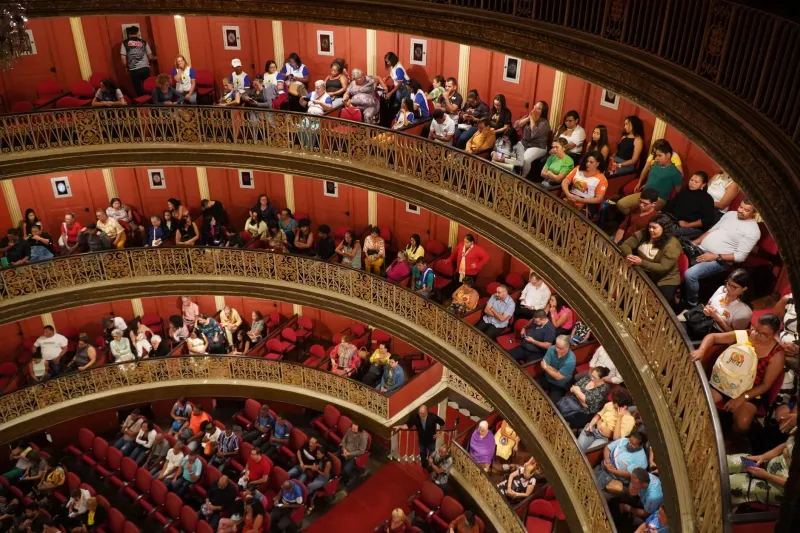
There's a moment in any great performance when the audience collectively stops breathing. That moment happened last spring in a 340-seat black box theater in Tulsa, Oklahoma — not during a Broadway revival, not at a Lincoln Center showcase, but during an original production of a play written by a local Muscogee playwright that had never been staged anywhere else on earth. The audience leaned in. Nobody checked their phones.
That's the story of American theater in 2024, and it's not the one most people are telling.
The Myth of the Cultural Capital
For decades, the cultural geography of American theater was pretty simple: New York was the center, and everywhere else was the periphery. Regional companies existed to develop talent that would eventually migrate east, or to mount touring productions of whatever was already proven on Broadway. The implicit hierarchy was baked into the industry's DNA.
But something shifted — and not just because of the pandemic, though that accelerated everything. Slowly, then suddenly, smaller American cities started building their own theatrical ecosystems from the ground up. Not as feeders for New York. As destinations in their own right.
"We stopped waiting for permission," says Marcus Ellery, artistic director of a mid-sized repertory company in Chattanooga, Tennessee. "For years there was this sense that legitimacy came from somewhere else. And then you realize — the audiences are here. The stories are here. The talent is here. Why are we shipping all of it to Manhattan?"
Pandemic as Pressure Test (and Unexpected Catalyst)
The COVID-19 shutdown was brutal for theater everywhere, but it hit Broadway institutions with a particular ferocity. Massive overhead, union contracts, tourist-dependent revenue models — the pandemic exposed how fragile the New York theater economy actually was. Meanwhile, something unexpected happened in smaller markets: community investment surged.
In cities like Boise, Idaho, and Fayetteville, Arkansas, local philanthropists who'd never thought much about theater suddenly recognized it as civic infrastructure worth protecting. Arts councils that had been chronically underfunded got emergency injections of both federal relief money and private dollars. And when theaters reopened, audiences showed up with a renewed hunger — a post-isolation appetite for live, communal experience that streaming simply couldn't satisfy.
"People came back different," says Renata Voss, who runs a storefront theater company in Cincinnati. "They weren't passive anymore. They wanted to feel something real. That's actually a perfect environment for theater to thrive in."
Streaming Changed the Talent Map
Here's the part of the story that doesn't get told enough: streaming didn't kill regional theater. It democratized where artists choose to live.
When a playwright or director no longer needs to be physically present in New York to access industry networks, pitch meetings, or professional development, the calculus of where to build a life changes dramatically. Asheville, North Carolina has become something of an arts colony. Albuquerque, New Mexico is developing a serious contemporary dance scene. Pittsburgh, already home to one of the country's most respected regional theater institutions, is seeing a second wave of smaller experimental companies fill in around it.
Actors who might have spent their twenties grinding through Manhattan showcase productions for $50 a week are choosing instead to anchor themselves in cities where they can actually afford rent — and where regional companies are increasingly offering competitive salaries, healthcare, and creative autonomy that New York couldn't match.
"I made more money last year doing theater in Louisville than most of my friends made doing background work in LA," says one actor, who asked to remain anonymous so as not to complicate professional relationships. "And I got to originate a role. I got to actually act."
The Audience Is Ready
None of this works without audiences, and here's the genuinely exciting part: American theatergoers outside major metros have been quietly hungry for this for years. They just didn't always have a product worth showing up for.
That's changed. Companies in cities like Omaha, Salt Lake City, and Richmond, Virginia are staging work that's adventurous, diverse, and locally resonant in ways that touring Broadway productions fundamentally can't be. A play about the opioid crisis in rural Appalachia hits differently when it's performed by actors from that community, for an audience that lived through it.
"We sold out a six-week run of a play about the 1921 Tulsa Race Massacre," says one Oklahoma theater director. "No major New York company had touched that story in a mainstage production. We had Tulsa descendants in the audience every single night. That's not something you can replicate anywhere else."
What This Means for Cultural Democracy
The decentralization of American theater isn't just a feel-good story about plucky regional companies. It's a genuine shift in who gets to make culture, whose stories get told, and who gets access to live performance as an art form.
Broadway tickets now average over $150, with premium seats running several times that. The economic and geographic barriers to accessing New York theater effectively exclude huge swaths of the American population. Regional theater — particularly companies committed to community pricing, free performances, and multilingual programming — represents a fundamentally more democratic vision of what this art form can be.
It's also producing work that's more formally adventurous than the Broadway commercial machine typically allows. Without the pressure to recoup a $20 million capitalization, regional directors are taking risks. They're staging world premieres of challenging new plays. They're experimenting with form. They're failing productively and learning publicly — which is exactly how art is supposed to develop.
The Road Ahead
None of this is to suggest that the challenges aren't real. Many regional companies still operate on razor-thin margins. Audience development remains difficult, particularly with younger demographics who didn't grow up with theatergoing as a cultural habit. The talent pipeline, while improving, still sees too many skilled artists eventually pulled toward coasts by the gravity of industry concentration.
But the trajectory is unmistakable. American theater is spreading out, and the culture is richer for it. The next great American play might premiere in Spokane. The director who reshapes the form might be building her career in Memphis. The audience that discovers theater as a transformative art might be sitting in a converted warehouse in Des Moines.
That's not a consolation prize for missing out on New York. That's the story of a living art form finding new places to breathe.