The Rink Is the Last Room in Town Where Nobody's Performing
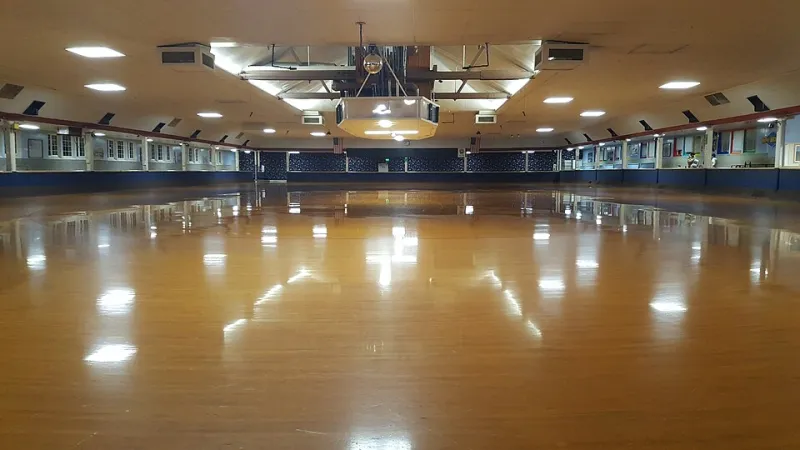
Photo: Another Believer, CC BY-SA 4.0, via Wikimedia Commons
The parking lot smells like diesel and fryer oil. Inside, the carpet is the color of a bruised peach and has been since roughly 1994. Admission is nine dollars. Skates are four. There's a DJ booth shaped like a castle turret, and at 8:40 on a Wednesday, seventy-odd people are going in circles to a pop song while a nine-year-old in light-up wheels cuts up the middle like she holds the deed.
She doesn't. The woman behind the counter does, and she's been running this floor since she was a junior derby skater with a bad knee. "We're busier now than we were before the pandemic," she says, sorting rentals by size with the calm of someone who has seen everything. "Different crowd, though. Younger. A lot of people who've never skated in their lives."
That's the story worth paying attention to. The rink — written off for two decades as a pizza-scented birthday-party relic — has quietly become one of the few genuinely good nights out in mid-size America, and it got there without a rebrand, a design consultant, or a single thing anyone would call an "experience."
The cheapest room in town, and everybody has done the math
Cover at a bar is fifteen to twenty. Two drinks is thirty. An hour of bowling plus rentals runs you sixty before you've eaten anything. A rink is nine dollars at the door, four for skates, and the floor belongs to you until the lights come up. A slushie is two and a half bucks. If you fall, nobody charges you for it.
Operators have noticed the math working in their favor. Wednesday-night adult skates now run until eleven at rinks from Toledo to Tulsa to Boise. Somebody in Duluth started a soul night. A rink outside Chattanooga does a bluegrass skate once a month where a fiddle player sets up on the carpet by the arcade and the tempo of the floor changes entirely. None of this required a liquor license, which is part of the point: the rink is the rare nightlife venue where the eighteen-year-olds and the sober and the broke and the people who don't drink anymore are all first-class citizens instead of afterthoughts.
The queer skate night that started as a group chat
The most interesting thing happening on American rink floors right now started, in several cities, as a workaround. A group of friends wanted somewhere to hang out that wasn't loud enough to make conversation impossible and dark enough to make everybody self-conscious. So they called a rink on a Tuesday, asked what a private buyout cost, split it, and posted the flyer.
Two hundred people showed up. Then it became monthly. Now rinks in a dozen states run queer skate nights on the regular, and the format is quietly brilliant: flat floors, good lighting, cameras on the exits, all ages until nine, nobody's body hidden behind a table or a cocktail. You can be bad at it in public. That's the whole draw. The humiliation is mild, shared, and completely survivable, which is more than most nightlife can promise.
The vendors in the corner
At the better rinks, the carpet between the rental counter and the arcade has become real estate. Twenty-five bucks gets you a folding table. On a good Saturday you'll find crochet, zines, permanent jewelry, a person doing five-minute tattoos, a baker selling out of cookies by nine, and somebody's cousin with a rack of vintage denim. It's a farmers market with better music and worse lighting, and it functions as the thing every downtown master plan promises and rarely delivers: a room where people who live in the same place find out they exist.
The birthday parties are still happening, by the way, and they are load-bearing. A rink without a Saturday-afternoon birthday party economy is a rink that closes. The kids' parties pay the lease that makes the weird Wednesday possible. That's not nostalgia. That's a business model that happens to produce community as a byproduct.
What the strip mall built that downtown couldn't
Here's the uncomfortable part. Almost none of this is happening in the neighborhoods your city spent a decade trying to "activate." It's in strip malls, in old warehouses on the edge of town, next to a tire place, on a parcel that got zoned for exactly this in 1978 and was never worth redeveloping. Rent is cheap because the building is a barn with a lease signed long ago. There's parking. There's no noise complaint structure to navigate. Nobody had to get a special permit for a DJ.
Meanwhile downtown gets another twenty-eight-dollar cocktail bar with a two-hour wait and a dress code nobody can parse. Cities keep trying to manufacture the third place with programming and grants, and the rink keeps doing it with a turret-shaped DJ booth and a slushie machine that hasn't been cleaned since the Clinton administration.
The part where your body learns something
Around ten, the DJ switches to the slow one and the floor empties by half. The other half grabs a partner. A twelve-year-old wipes out in front of the arcade, gets up, looks around, decides nobody saw, and keeps going. Somebody's dad is doing laps at a pace that suggests he has been doing laps at that pace since 1987.
Nobody is filming. That's the tell. You look around a packed rink at ten on a Saturday and see almost no phones, because the whole activity requires your hands and your feet and your attention, and the floor will humble you if you get cute. It is not a cool room. It has never been a cool room. It's better than that — it's a room where being slightly ridiculous is the price of admission and the point of the exercise.
The rink doesn't need a revival narrative. It needs a lease renewal, a working sound system, and you, in rental skates, going the wrong way around until someone politely corrects you.